D.C. Council Moving Forward with Bill Authorizing Commercial Use of Autonomous Vehicles
On May 1, 2026, D.C. Councilmembers Charles Allen, Brooke Pinto, and Matthew Frumin introduced the “Autonomous Vehicle Deployment Authorization Act of 2026,” following the work of the Autonomous Vehicles Working Group established in 2018 by Mayor Muriel Bowser to study the technology.
In the letter to the City Council, Councilmember Charles Allens explains the purpose of the legislation:
- Establish a commercial autonomous vehicle program
- Create a phased timeline for deployment of commercial AVs
- Establish clear rules for engaging autonomous driving features (personal and commercial)
- Establish a vehicle miles traveled tax
- Improve public transit
- Support existing taxi and rideshare workers
- Clarify how existing traffic safety law and liability rules apply to autonomous vehicles
“As introduced, Bill 26-684 would establish a Commercial Autonomous Vehicles Program with the District Department of Transportation (“DDOT”) allowing for certain autonomous vehicles to transport passengers and goods in the District. It would require that applicants and recipients of a commercial AV permit submit planning documents, reports, and data to DDOT. It establishes penalties for noncompliance with program requirements as well as an appeals process. Among other things, it would create a vehicle miles traveled tax that applies to commercial AV operations, and also require that autonomous driving system manufacturers register their products with DDOT.”
Impact of Autonomous Vehicles Locally
On Tuesday night, June 23, 2026, I had the opportunity to attend the DC Forum on Autonomous Vehicles, organized by the Washington Area Bicyclist Association (WABA). Speakers from organizations around the community attended, including the Department of For-Hire Vehicles (DFHV), DC Families for Safe Streets, the DC Multi-Modal Accessibility Council, the Institute for Safer Trucking, and the DC Trial Lawyers Association (DC-TLA). All provided their initial views and concerns regarding the forthcoming driverless vehicles. Some of the topics of discussion were:
- Proper and thorough testing of vehicles
- Safety for pedestrians and cyclists
- Increase in traffic congestion
- Impact on for-hire workforce in DC
- Hazards obeying police, fire, and EMS in emergencies
- Equity of ridership across all eight wards
- Affordability
- Accessibility for those with disabilities
- Criminal liability
- Liability for damages and deaths
- Pickup and drop off in bike lanes
- Hacking and highjacking technology
- How and where the vehicles are being trained
- Maintenance alerts from vehicles
- Whether passengers can turn off the autonomous feature
- Software recalls
- Reliability during low visibility (i.e., dawn, dusk, rain or snow)
- Size of initial fleets
- Potential revenue for the city and where it goes
As a precursor to the May bill introduction, in April 2026, the D.C. Council bill unveiled a plan that would regulate robotaxis and charge companies a “vehicle miles traveled” fee. The proposal, as explained by Councilmember Allen, would generate a $0.15-per-mile tax for all autonomous vehicle miles traveled and the revenue would be split: 50% to public transit infrastructure and service and 50% to workforce transition programs for taxi and rideshare drivers affected by the deployment of commercial AVs.
All groups have their concerns. While everyone understands the reality that autonomous vehicles are already here, there is much public discussion that needs to take place prior to beginning the program.
To make your views heard, email your designated Ward representative via the Council Directory.
Views from the Chamber of Commerce
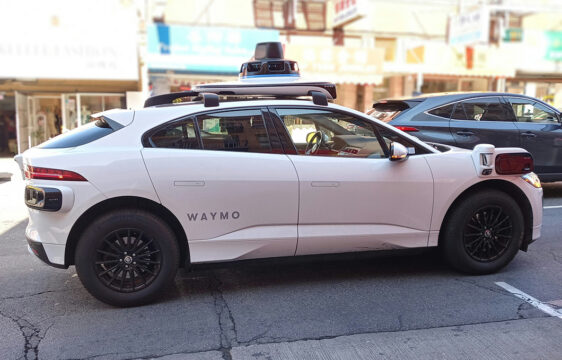
For years it seemed the District’s Department of Transportation was attempting to sabotage the rollout of autonomous vehicles. Driverless cars, including Waymo, are currently restricted from operating fully without drivers in DC. However, Waymo and Zoox are currently testing in DC with a driver at the wheel. Waymo has stepped up lobbying in DC to accelerate a national expansion and boasted of a safety record that would put human drivers to shame.
Ambitions for Autonomous Vehicles in DC
The DC Chamber of Commerce states the bill has two main ambitions. The first is equity. The bill requires every operator to submit an equity plan demonstrating reliability across all eight wards, not just the downtown corridors where ride demand is often the heaviest. Accessibility provisions require user interfaces that allow riders with disabilities to request and receive service. These provisions respond directly to the residents and advocates who have been telling the Council for years that DC’s transportation system does not work for everyone. The second is funding. The District of Columbia is currently in a budget deficit, and this bill, which establishes the “vehicle miles traveled tax,” is aimed at providing needed funding for public transportation and workforce transition programs.
Hindrances for Autonomous Vehicles in DC
The Chamber of Commerce sees these goals as reasonable and worthy. However, there are two provisions in the bill that work against the goals. These issues make it financially prohibitive for commercial AV services to serve the District.
The first is the fleet cap. The bill caps commercial AV fleets at 200 vehicles until January 2028, making the bill’s equity provisions structurally impossible to achieve. For a better perspective, look at the data. DC averages between 1,249 and 1,905 unique, active ride-hailing drivers on any given day, completing between roughly 95,000 and 147,000 daily ride-hailing trips. The existing rideshare workforce is six to ten times larger than the AV fleet the bill would permit.
A fleet of 200 vehicles is not nearly enough to provide reliable service across 68 square miles and eight wards. The bill wants equity, but splitting this evenly across all wards is 25 vehicles per ward. Current vehicle for hire service providers will tell you fleets are never perfectly distributed.
Providers have a clear incentive to concentrate vehicles downtown (Wards 1 and 2) where the utilization rate is highest. This would cluster the vehicles in one zone and would barely reach other wards. These provisions reach a plateau, which is exactly the opposite of what the bill’s equity provisions are trying to achieve.
When a for-hire service is initiated, service patterns are set, and riders become accustomed to these patterns and learn to expect the certainty. If a fleet is concentrated downtown for the first year, that fleet is much more likely to stay there due to rider expectations, operating economics, and long-term rollout decisions. This would undermine the idea of citywide access.
The proposed “vehicle miles traveled” fee also includes passenger-free “rebalancing” miles where vehicles must drive to other parts of the city. This has the benefit of limiting the amount of miles the vehicles are driving endlessly around the same city blocks – but this tax structure does damage to the bill’s goals of equity.
Rebalancing, or miles driven between pickup and drop off, is what makes geographic equity possible – for example, a drop off in Anacostia followed by a nine-mile drive to a pickup in Brookland. Under the bill’s provisions, the cost of rebalancing alone would be $1.35 in tax before any fare is collected.
On a grander scale, multiplying this cost by all the possible miles these vehicles could travel in one day gives service providers a strong incentive to provide service only to the city’s highest-demand corridors. It would simply be too expensive to operate in other wards as operating costs increase rapidly, ensuring the disincentive for longer trips in low-density neighborhoods. Service providers will inevitably need to increase the prices for rides, further limiting the number of residents who are able to use the service.
The Autonomous Vehicle Deployment Fund depends on widespread adoption and large-scale adoption to generate meaningful revenue for WMATA and workforce transition programs. But a fee structure that discourages ridership and limits fleet growth and expansion ultimately shrinks the very revenue base the bill is trying to create. The $0.15-per-mile vehicle miles traveled tax also sits on top of DC’s existing 6% TNC gross revenue tax. Together, those fees would make DC the most expensive AV market in the country before a single ride is offered.
Nationwide and Local Push for Autonomous Vehicles
One important note – driverless vehicles are here – but only in specific places. The U.S. is still in an expansion phase, not a universal rollout.
House Republicans have been pushing the DC mayor to begin legalizing commercial AVs, citing Waymo operations in 11 cities, and stating this is “no longer an emerging technology.”
Driverless cars, including Waymo, are currently restricted from operating fully without drivers in DC. However, Waymo and Zoox are currently testing in DC with a driver at the wheel.
Waymo has stepped up lobbying in DC to accelerate a national expansion. Its current national footprint covers over 1,400 square miles across 11 major U.S. metropolitan markets. Waymo, an Alphabet subsidiary, is looking to take over the marketplace and squeeze out other companies like Zoox, an Amazon subsidiary.
While no single company spans the entire country, several key players are scaling their autonomous networks:
- Waymo: The current market leader with over 250,000 paid rides per week across roughly a dozen major U.S. cities.
- Tesla: Working to roll out fully autonomous operations through its Full Self-Driving (FSD) Network and Cybercab initiatives.
- Zoox: Amazon’s subsidiary manufacturing a distinct, bidirectional vehicle with plans for public rollouts in cities like Las Vegas.
Waymo now serves over 20 million trips, operates a fleet of roughly 3,000 robotaxis, and is targeting one million trips per week by the end of 2026. In February, the company expanded internationally to London and Tokyo.
Further Thoughts
Residents of Washington, DC, you are among friends. Other cities in the United States and across the globe are all experiencing the excitement, fear, and uncertainty of fleets of driverless vehicles on our streets. Pedestrians and cyclists will increase purchases of safety equipment. Parents may not want their children walking to and from school. And senior citizens will find the city more challenging than ever. We cannot stop the new technology any more than we could stop the cell phone madness that swept across our land. What we can do is remain informed and aware.