Seven employers across the United States are facing workplace harassment lawsuits filed by the U.S. Equal Employment Opportunity Commission (EEOC). The Society for Human Resource Management (SHRM) included Joseph Greenwald & Laake principal Jay Holland in an Aug. 10 collective list of articles published about these lawsuits on SHRM Online. Specifically, Holland was quoted in an Aug. 8 article that discussed employees secretly recording work conversations for litigation purposes.

SHRM notes that workplace harassment claims make up approximately one-fourth of EEOC cases filed recently, and that about one-third of discrimination charged received by the EEOC include harassment allegations. With smartphones becoming a staple in the workplace, it has become easier for employees to record conversations with co-workers, supervisors, human resources and company executives as support for upcoming lawsuits.

“A recording of sexual harassment or a discriminatory comment can be very powerful evidence and damaging to the employer,” Holland told SHRM Online.

The article went on to discuss the different types of consent required for recording conversations, such as one-party and all-party consent. Each state maintains its own laws on what type of consent is required. It also discussed rules about recording conversations under the National Labor Relations Act (NLRA), as well as potential public-relations risks from a leaked conversation, regardless of whether its recording was permitted or not.

To read the rest of the article, click here.

Jay Holland is a principal in JGL’s Civil Litigation Group, and the chair of the firm’s Labor, Employment and Qui Tam Whistleblower practice. He is a renowned employment and qui tam litigator known for taking on tough cases and achieving exceptional results.

Nine Joseph, Greenwald & Laake attorneys have been recognized in the 25th edition of The Best Lawyers of America as some of the country’s most successful, efficient and dedicated. Every attorney who made the list was selected through a peer review process, reflecting the high esteem in which their fellow legal professionals hold this year’s honorees.

David Bulitt, Stephen Friedman, Reza Golesorkhi, Jeffrey Greenblatt, Andrew Greenwald, Burt Kahn, Timothy O’Brien, and Steven Pavsner have all been featured on the list. Additionally, David, Stephen, Jeffrey, Andrew and Timothy are reprising their spots from last year’s list.

The number of JGL attorneys in this year’s list shows the community’s appreciation for JGL’s commitment to quality service. The above listed honorees come from numerous practice groups with a wide range of experiences, showing that JGL exceeds the expectations of their clients and peers in every area. The JGL staff looks forward to continuing its award-winning service to the community in coming years.

Firm 35736 Us Basic M E25

A lawsuit filed Tuesday in Howard County Circuit Court by three former top chiefs in the county’s public school system accuses school board members of discrimination, retaliation and harassment for political opinions, and in two cases, for sexual orientation. Joseph Greenwald & Laake principal Jay Holland represents the three officials: Tim Thornburg, former director of staff relations; Grace Chesney, former chief accountability officer; and John White, former director of communications. Holland spoke to Tim Prudente at The Baltimore Sun regarding the case.]

“We look forward to seeing this matter through and vindicating their rights and the harm that they suffered,” Holland told The Sun.

The three chiefs allege that the school board sought to drive out Foose, who resigned as superintendent in May 2017, and then targeted her chiefs with “discriminatory, hostile, harassing and abusive behavior.” Following her resignation, Thornburg resigned under extreme pressure, and both Chesney and White were laid off. The lawsuit comes in the wake of an 11-month investigation of the school board by the Howard County Office of Human Rights, led by investigator Cheryl Brower. Three reports of about 100 pages each state that there is reasonable cause to believe that the school board discriminated against Thornburg, Chesney and White.

To read the rest of the article, click here.

Jay Holland is a principal in JGL’s Civil Litigation Group, and the chair of the firm’s Labor, Employment and Qui Tam Whistleblower practice. He is a renowned employment and qui tam litigator known for taking on tough cases and achieving exceptional results.

While it may at first glance seem that a non-profit organization’s philanthropic nature would set it apart from profit-driven business models, the legal reality of running a non-profit is actually often similar to that of a for-profit business. This is especially true regarding employer-employee relations, and the employer’s obligations to the employee under federal, state, and local employment laws and ordinances.  It is very rare indeed that employment-related, legal requirements are different for non-profit employers than that of companies. 

For instance, just like for-profit businesses, non-profits are obligated to obey the dictates of the Fair Labor Standards Act (FLSA). The FLSA establishes the fundamental guidelines of employee rights. It prohibits child labor, for example, and mandates overtime pay for employees who have worked more than 40 hours in one week. Moreover, Title VII which protects employees from discrimination based on race, religion, and sex treats non-profit employers in most cases like other corporations. Similarly, the Family Medical Leave Act requirements are the same. Because non-profits are not asking employees to work for the profit of the business, they can fail to consider that they have essentially the same obligations to their employees as for-profit groups.

Non-profit organizations also need to understand state and local employment laws. State and local laws can vary greatly and are subject to change depending on local government administration. Therefore, non-profits would be well advised to work with a local attorney to ensure the non-profit’s compliance with state- and local-level employment law. Problems for non-profits sometimes arise when the non-profit’s management does not understand that sometimes state or local employment laws have more stringent requirements than federal law.

A non-profit organization should be able to focus all of its time and effort exclusively to the issues for which it works—hiring a lawyer to worry about the minutiae of employment law compliance can save an organization valuable time and effort and ensure that it does not run afoul of federal, state or local requirements.

Joseph Greenwald & Laake principal Brian Markovitz was included in a Bloomberg Law report on strategies to creative more inclusive workplaces. With Bloomberg’s Martin Berman-Gorvine, he discussed how employers should approach the question of diversity in the current charged political environment. The report states that employers have been tougher on making their workplaces more diverse and inclusive due to recent changes in the country’s political climate.

Markovitz agreed that employers should take a hard line stance toward any employees who cross the line to open prejudice from disaffection and grumbling because these are blatant cases of discrimination. He said that people who attack others on the basis of protected characteristics “should not affect what employers do.”

“They’re wrong and they’re violating the law,” he continued. “I recommend to my employer clients they just fire somebody like this.”

The report also included case studies on large United States corporations, such as General Motors Company, Atlassian Corporation, McCann Worldgroup and Sodexo.

Brian Markovitz is a principal in JGL’s Labor and Employment and Civil Litigation practice groups and focuses on helping victims who have suffered severe injustices in the workplace. He represents individuals in complex employment litigation and appellate matters involving wrongful termination, retaliation by employers in response to reporting fraud or misconduct and discrimination on the basis on race, gender, age and sexual orientation.

To read Brian’s contribution to the Bloomberg Law report, click here.

Reproduced with permission. Published July 26, 2018. Copyright 2018 by The Bureau of National Affairs, Inc. (800-372-1033) <http://www.bna.com>

Reports obtained by both The Baltimore Sun and WBAL 11 News allege that some members of the Howard County school board discriminated against three former top-level employees, creating a hostile work environment. Joseph Greenwald & Laake principal Jay Holland is representing the three alleged victims of the discriminatory and homophobic behavior.

Holland spoke to both the Sun and WBAL regarding the reports, which followed the former Howard County schools superintendent Renee Foose’s resignation last year. The reports found that when Foose resigned, three of her top-level deputies; Elizabeth Grace Chesney, Timothy Thornburg and John White; were refused appointments, barred from meetings and sent to smaller offices.

In the reports, human rights investigator Cheryl Brower wrote that there was sufficient cause to believe that the three employees were targeted for supporting Foose and for being gay, in the cases of both Chesney and Thornburg.

“Some of it is shocking, but the conduct and behavior was shocking,” Holland told WBAL in an on-screen interview. “Two of these individuals were discriminated against based upon their sexual orientation, and all three of these individuals were discriminated against based upon their political opinion.”

While the Howard County Board of Education has argued against the allegations, the three former employees are standing behind their stories.

“These reports are merely a vindication of what they say happened to them,” Holland told WBAL. “They were singled out.”

The three employees filed complaints with the county Office of Human Rights last year, and when the investigation concluded, they withdrew their cases to explore court action.

“We will decide shortly whether to file a lawsuit,” Holland told the Sun.

To read the Baltimore Sun article, click here. To view the WBAL video, click here.

Jay Holland is a principal in JGL’s Civil Litigation Group, and the chair of the firm’s Labor, Employment and Qui Tam Whistleblower practice. He is a renowned employment and qui tam litigator known for taking on tough cases and achieving exceptional results.

The Daily Record has published a story detailing the success of Joseph, Greenwald & Laake attorneys Alyse Prawde and Timothy Maloney in a recent case against the Montgomery County government.  The victory sets a valuable precedent in terms of the interpretation of the Maryland Public Information Act (MPIA).

Joseph, Greenwald and Laake represented Bernadette Fowler Lamson, a long-time senior counsel in the Montgomery County Attorney’s office.  Lamson filed an MPIA request that sought disclosure of supervisory notes withheld by her employer and her supervisor, Silvia Kinch. Lamson asserted that the notes might have been the basis of a negative job evaluation that she received. In general, Maryland state and county employees are entitled to see their own personnel files under the MPIA.

Maloney argued the case in the Maryland Court of Appeals and attorney Alyse Prawde drafted the briefs filed in the case. 

The Court of Appeals reversed the rulings of two lower courts, holding that the notes had to be reviewed by a judge to see if they should be disclosed to Lamson. The lower court had held that the notes were not subject to the MPIA because they were “in a personal journal that was never a part of [Lamson’s] personnel file and were intended to be private.”

The Court of Appeals concluded that “the mere physical location of a record is not necessarily dispositive of its characterization.  It is equally possible that the notes contain entries that relate to {Lamson’s] employment and or the devaluation of her performance rating.  In either instance, there is uncertainty regarding the nature of the records at issue and must be resolved by closely examining the notes at issue, as well as the exceptions offered thereto.”

Timothy Maloney is a principal at JGL with decades of experience in both appellate and trial litigation

Alyse Prawde is an attorney in JGL’s Civil Litigation group. Alyse earned her J.D. cum laude from the University of Maryland School of Law, at which she was honored with the Elizabeth Maxwell Carroll Cestnut Prize for her excellence in scholarship and writing. Her already impressive legal portfolio includes working as the Executive Articles Editor and the Maryland Journal of International Law and as an attorney with the Immigration Clinic.

Md Daily Record

If you want to get “hitched” in the District of Columbia, you don’t have to obtain a marriage license or exchange vows during a religious or civil ceremony in order to do so!

Pursuant to case law in the District of Columbia, in order to establish a common law marriage the following requirements must be met by two legally capable individuals: a mutual agreement, in the present tense, to enter into a state of matrimony; and the consummation of their agreement by cohabitating as husband and wife. (United States Fidelity & Guaranty Co. v. Britton, 269 F.2d 249, 251 (1959))  “Although there is no set formula required for the agreement, the exchange of words must ‘inescapably and unambiguously impl[y] that an agreement was being entered into to become man and wife as of the time of the mutual consent.”  (Coates v. Watts, 622 A.2d 25, 27 (1993))  Contrary to popular belief, there is no requirement that the parties live together for a specific period of time in order to establish a common law marriage.

The District of Columbia is one of the few states that still authorizes individuals to establish a common law marriage. While Maryland law does not authorize two individuals to establish a “common law” marriage within the state, Maryland courts uphold marriages that were validly entered into in accordance with another state’s law.  As a result, an individual seeking to obtain a divorce in Maryland whose marriage was established based on the constructs of common law marriage in the District of Columbia or elsewhere, must prove that their marriage was validly entered into in accordance with the law where the marriage was entered– just as individuals who were married by religious or civil ceremony must do.

What proof is required to establish a common law marriage? In accordance with DC law, a common law marriage may be proved by either direct or circumstantial evidence, but the best evidence and possibly, the most preferred, is the testimony of each of the parties. (Marcus v. Director, 548 F.2d 1044, 1048-49 (1976))  The judge will determine the credibility of each party and what weight should be provided to their testimony. (Id.)  “The proponent of the marriage must prove, by a preponderance of the evidence, that there was a common law marriage.  They must show that the parties cohabitated as Husband and Wife, following an express mutual agreement, which must be words of the present tense.”  (Bansda v. Wheeler, 995 A.2d 189 (DC 2010))


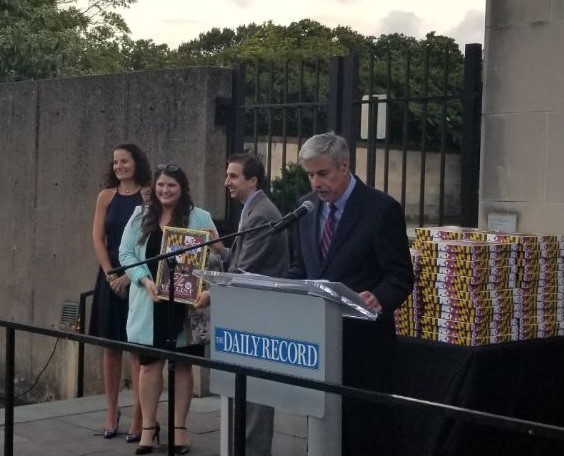
Joseph, Greenwald & Laake attorney Brian J. Markovitz has been declared a Mover and Shaker by The Daily Record. The status honors professionals who have achieved widespread recognition in their fields.

Brian is a principal in JGL’s Labor and Employment and Civil Litigation practice groups. He focuses primarily on representing those who have suffered injustice in the workplace, namely victims of wrongful termination, retaliation by employers, and discrimination on the basis of race, gender, age and sexual orientation.

Along with his most recent recognition from The Daily Record, Brian has also been named one of the country’s Top 100 National Trial Lawyers. He is widely recognized as a leading practicioner in the representation of whistleblowers in both individual and class action suits involving employer violations of the federal False Claims Act. He works across numerous industries and has achieved success wherever he has gone.

Md Daily Record

Joseph, Greenwald & Laake principal Brian Markovitz has been named to The National Trial Lawyers’ “Top 100” list. As its name suggests, the list honors the year’s most effective trial lawyers in the country.

In addition to prestige, there are numerous tangible benefits to having a position on the elite list. As an honoree, Brian will be able to submit written content to The National Trial Lawyers’ publication team, participate in a free CLE course, and have the opportunity to nominate other top lawyers to next year’s list.

This is not Brian’s first time being named to the Top 100 list. He has been previously honored for his exemplary work as a principal in JGL’s Labor and Employment and Civil Litigation practice groups. As an example, he has represented individuals across the country in complicated employment litigation issues involving wrongful termination, retaliation by employers, and workplace discrimination. Most notably, Brian’s work led to the indictment of scheme organizers who arranged for the illicit misappropriation of nearly $20 million of fraudulent subcontracts for private companies seeking contracts in Afghanistan.

Brian is honored to retain his spot amongst America’s best trial lawyers and will look to continue his invaluable service to the community in the coming year.

Prenuptial agreements are an important vehicle for protecting and preserving wealth and assets acquired prior to and during marriage, as well as for pre-determining what assets and payments you and your soon-to-be-spouse will be entitled to upon the unfortunate occasion of a divorce.  However, not all prenuptial agreements are worth the paper their printed on.  When a party to a divorce requests that a Maryland Circuit Court determine the validity of their prenuptial agreement, the courts do not always uphold these agreements as valid.  The reasons they are deemed invalid range from overreaching to various contractual defenses such as fraud, duress or even coercion.  If you are considering having a prenuptial agreement prepared in Maryland, then there are several factors that should be taken into consideration in order to protect it from being declared invalid by a Maryland court.  Although not an exhaustive list, the following should be at the forefront of your mind:

  1. You and Your Soon-to-be Spouse Should Hire Your Own Separate, Independent Attorneys

While there are numerous tools available on the internet that enable the quick, easy and inexpensive purchase of a template for the preparation of a prenuptial agreement, a template is a far cry from having a knowledgeable attorney prepare, negotiate and finalize the agreement on your behalf.   A knowledgeable attorney should provide sound advice regarding the necessary contents of the agreement, explain the importance of each and every provision in the agreement and the procedure and timing in which it should be executed by the parties.  If the goal is to preserve and protect wealth and assets, then the investment of hiring an attorney to draft the agreement on your behalf is well-worth the price.

Although not a prerequisite to its validity, not only should the initial drafter of the agreement hire their own attorney, but it is highly important that each party to the prenuptial agreement retain their own separate independent attorney in the drafting and negotiation of the agreement.  That means that both you and your soon-to-be spouse should hire two separate attorneys.  In addition, the agreement should contain a reference to name of each party’s attorney and, if one party decides not to retain an attorney, then the agreement should contain language to the effect that the party was provided ample opportunity to do so and decided not to.

If each party retains their own attorney during the process of drafting and negotiating the terms of the prenuptial agreement, then it will be less likely that one of the parties will be successful in attacking the prenuptial agreement on the contractual defenses of fraud, duress, coercion, mistake, undue influence, incompetence, or even unconscionability.  Each party’s attorney should be looking out for their client’s own best interests, which should also help to prevent any future arguments as to inequity or unfairness in the procurement of the agreement.

  1. Financial Disclosures by Each Party Are a Must

The prenuptial agreement should also include a comprehensive financial disclosure by each party, which should contain a reference to an exhaustive list of each parties’ pre-marital real and personal property, and the property’s respective values.  If a party is waiving an interest in the other party’s pre-marital assets, then the Maryland case law is clear that the party waiving their interest must have knowledge of what they are actually waiving. The financial disclosure should confirm exactly what each party owns at the time of the execution of the prenuptial agreement.  Although the lack of a financial disclosure by each party is not always a winning argument when attempting to attack the validity of the prenuptial agreement, it is one of the arguments that carries substantial weight.  The financial disclosures are typically attached to the back of the prenuptial agreement as exhibits and it is easy to overlook attaching the exhibits to the final draft of the agreement.  If each party retains their own attorney then it will be less likely that an important detail such as this will be overlooked.

The Maryland case law states that the “real test in a determination of the validity of an . . . [prenuptial] agreement is whether there was overreaching, that is, whether in the atmosphere and environment of the confidential relationship there was unfairness or inequity in the result of the agreement or in its procurement” and it is the proponent of the agreement’s burden to prove this.  Stewart v. Stewart, 214 Md. App. 458, 462 (2013).  There are several ways to prove this.  For instance, if the prenuptial agreement contains a “full, frank, and truthful disclosure, of the worth of the property, real and personal, as to which there is a waiver of rights in whole or in part, so that he or she who waives can know what it is he or she is waiving.  Indeed, if that standard is met, the agreement may well be rendered resistant to attack.” Id.

If the financial disclosure contained in the prenuptial agreement does not meet the high standard of proof necessary to establish that there had been no overreaching in the creation of the agreement, then there are alternate standards that the proponent of the agreement must meet in order to prove the validity of the agreement.  Id.  If an inadequate disclosure and an unfairly disproportionate allocation existed, then the alternate standards that the proponent of the agreement must meet are: (1) whether the benefit to the waiving party was commensurate with what he or she relinquished such that the agreement was fair and equitable; and (2) whether the party attacking the agreement entered into the agreement freely and understandingly. Id.

Since the adequacy of the financial disclosure is a key party of the prenuptial agreement, it is better to be safe than sorry when preparing it!

  1. Time is of the Essence

When considering whether to retain an attorney to prepare a prenuptial agreement, time is of the essence! Maryland case law is replete with examples of prenuptial agreements that were declared invalid and one of the recurring reasons for the invalidity, along with the lack of an adequate financial disclosure, is that the agreement was presented by the preparer of the agreement to the other party at the eleventh hour. If the prenuptial agreement is presented to the soon-to-be spouse a day or two, or even a few hours, prior to the parties’ marriage ceremony, the agreement could be vulnerable to attack.  It would be all too easy for the party who was unexpectedly presented with the prenuptial agreement to argue that they were coerced into entering into it because they felt they had no choice since the wedding was to take place the next day or in a few hours.  In addition, that same party could easily argue that they had no time to hire an attorney due to the last minute presentation of the proposal.  Those statements certainly do not bode well when combined with an agreement that is lacking a comprehensive financial disclosure.


On Monday, July 23, Joseph, Greenwald & Laake worked with entrepreneur coach Veronica Matthews to help inform local businesspeople in making their first hires and expanding their businesses in the early stages. JGL and Veronica also discussed proper handling of employees once first hires are made, such as putting proper employee processes in place in a timely and efficient manner.

JGL’s sponsorship is a part of a series of seminars conducted by the Prince George’s County Economic Development Council (PGCEDC). As part of its commitment to serving the greater community, JGL works hand-in-hand with groups like the PGCEDC and individual community members like Veronica Matthews to provide high-quality legal counsel. In addition to Veronica’s talk, the PGCEDC has more than a month of events planned to help local entrepreneurs improve their businesses.

Logo Slogan 0