Earlier this year, the Government Accountability Office released a twenty page report still finding HUBZone certification fraud is being overlooked by the Small Business Administration. HUBZone fraud occurs when contractors mislead their ability to meet the requirements for the SBA’s HUBZone program in order to receive government contracts specifically carved out for small businesses in economically distressed communities, in both rural and urban areas.

However, the SBA has made strides in protecting its Historically Underutilized Business Zone Program by acting on some of the GAO recommendations. The SBA has increased site visits by ten percent, deterring businesses from using fake addresses. It also now informs businesses of potential consequences of certification violations. The SBA continues to make small scale changes so no longer are many hands in the cookie jar.

So, what qualifies as a HUBZone?

A HUBZone is located in (1) a qualified census tract; (2) a qualified “non-metropolitan county” with a median household income of less than 80% of the State median household income or with an unemployment rate of not less than 140% of the statewide average; or (3) the boundaries of federally recognized Indian reservations.

Want to know if your employer is located in a HUBZone? Check the SBA’s HUBZone Map. 

Not only must a business with certification be located within a HUBZone, but it must also meet a list of other criteria:

  • The business must be a small business as defined by the SBA;
  • it must be owned and controlled by at least 51% U.S. citizens; or a Community Development Corporation, or an agricultural cooperative or an Indian tribe
  • its principal office must be located within a HUBZone; and
  • at least 35% of its employees must reside in a HUBZone

Most businesses found to be falsely certified in the HUBZone Program usually violate the last two criteria. They have “principal offices” in name only. These businesses have a virtual office or may just receive mail at the address which they claim is a principal office. Additionally, the businesses may never verify or, when renewing certification, double-check that 35% of their employees also reside in HUBZone qualified locations.

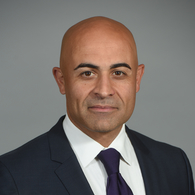
If you think your employer falsely certified certification or is misleading the SBA about maintaining certification, you are protected under the False Claims Act as a whistleblower. If the GAO is any indicator, these cases will soon be cutting edge. Attorney Brian Markovitz will discuss your potential case with you confidentially and explain your potential recovery for your assistance in combating fraud against the government. Brian can be reached at (301) 220-2200.

There are only 2 states in the nation that do not penalize people who have knowledge of abuse yet fail to report it to officials. Maryland is one of these states and many people are hoping this changes soon. In light of a recent Maryland case where an educator aide was sentenced to 100 years in prison on 23 counts of child sex abuse and pornography, many want to close the loophole on child abuse and not only penalize the abuser but those who have knowledge of the situation but do not do anything to stop it.

To not be able to hold people who know of the abuse is “really unconscionable,” says JGL principal Tim Maloney who filed suit against the school system in which that educator’s aide abused many children. In that particular case, Tim says “We had all kinds of warning signs, complaints by parents, children, teachers. He was walking the halls in pajamas, for God’s sake. This situation cries out for reform.”

Tim is with many other legislators who want Maryland to hold all associated in abuse situations accountable. The current bill in discussion proposes those who fail to report child abuse and have “actual knowledge” of it will face a misdemeanor charge and up to six months in jail or a $1,000 fine.

Timothy Maloney is a preeminent trial lawyer who has obtained millions of dollars in recoveries for his clients in a wide variety of complex matters, including civil rights, employment discrimination, whistleblower actions, and high-stakes business litigation. As a principal at Joseph, Greenwald & Laake, Tim has successfully taken on the government in numerous high-profile police misconduct and criminal defense cases. Tim remains a committed advocate for the public good and has held leadership roles with many civic and charitable organizations, including the University of Maryland Foundation; Maryland Catholic Conference; and St. Ann’s Center for Children, Youth, and Families. As a member of the Maryland Judicial Campaign Conduct Committee, Tim works to promote the integrity of judicial elections and has helped establish statewide guidelines for judicial campaign funding.

To read the full article, click here.

Jgl Logo

Joseph Greenwald & Laake seeks litigation law clerks for full-time summer positions. These are paid positions. Please click here to read the full job description: https://www.jgllaw.com/careers/law-firm-jobs-at-jgl

09 Jerry Miller Cropped 1

Joseph Greenwald & Laake principal Jerry Miller has been elected to serve as a member of  the Board of Directors of the Bowie Business Innovation Center (BIC), a diverse entrepreneurial business community where technology, government contracting and other start-up  companies in Prince George’s county can access mentoring, counseling, networking and technical assistance. The BIC Board of Directors is comprised of strategically selected area entrepreneurs and seasoned business executives. “I am very excited to be a part of the entrepreneurial spirit at BIC and look forward to working with the board as we fulfill our mission to help local entrepreneurs grow their businesses,” said Jerry.  Bowie BIC is a Maryland nonprofit organization headquartered at the Center for Business at Bowie State University. Jerry’s term on the board begins this month and runs through 2020.

Jerry is a principal in Joseph, Greenwald & Laake’s Business Services Group, and has nearly 30 years of experience in helping clients large and small tackle the legal challenges of owning and operating a business. In addition to advising clients on a wide range of business issues, including business formation and choice of entity, corporate tax, and employment contracts & related issues, Jerry advises his clients on commercial real estate matters, including leases,  purchases and sales.

There has been a significant increase in the amount of gray divorces, or the divorce of couples after the age of 50, and a new tax law signed at the end of 2017 has the potential to affect them. 

A little-noticed provision of the new law, the Tax Cuts and Jobs Act of 2017, eliminates the longstanding tax deduction for alimony payments. Since 1942, alimony payments have been deductible for those who pay them and have also been reportable as income for those who receive them. When the new provision kicks in on Jan. 1, 2019, alimony will no longer be deductible for the payer or reportable as income for the recipient.

Since the person paying alimony (more often than not, the husband) is usually in a higher tax bracket than the person receiving alimony (normally the wife), the result had been a tax break for the divorcing family as a whole. This is because the deduction was usually worth more in tax savings to the payer than the amount of taxes that had to be paid by the recipient of alimony. That will no longer be true under the new tax law. The U.S. Treasury will benefit, but only in the estimated amount of $700 million annually for the next 10 years, a pittance compared with the federal budget deficit.

What does this mean for people, like many of my clients, who are older with substantial assets and incomes? Alimony is actually not that common these days in the United States. The Census Bureau says that only 243,000 Americans received alimony in 2016 and that 98 percent of these were women. However, these “gray divorces” that I see in my practice are far more likely to be affected by the new tax provisions than divorces among younger people who haven’t built up much wealth.

Some experts say that the new tax regime will discourage divorce entirely.

Ken Neumann, director of the Center for Mediation and Training in New York City, was quoted in CNBC as saying that couples could reason: “We can’t afford to get divorced without that tax benefit, so we’re going to stay together, and I don’t mean happily.”

Other experts say there could be a surge of divorces in 2018 as spouses try to claim the deduction before the 2019 effective date of the new tax law.

I doubt that we will see a rush to the divorce courts, and I also doubt that middle- or high-income people will stay together unhappily just to avoid the tax man. One thing is certain: Life will become more challenging for divorce lawyers who are trying to do the best for their clients. The old alimony calculations, which were based on the old tax treatment of alimony, will go out the window. People will continue to get divorced, and lawyers will continue to do their best to put their clients in the best possible financial positions.

The American Bar Association’s (ABA) Federal Sector Labor and Employment Law Committee recently held its annual Midwinter Meeting. Joe Creed, Joseph Greenwald & Laake principal attorney and employee co-chair of the ABA committee, kicked off the meeting with welcome remarks. The meeting lasted two days, and featured labor and employment law updates presented by expert-lead panels.

Creed is dedicated to staying current on trends in the law governing the rights of federal employees and also learning how new cases involving those rights are decided by courts and administrative agencies. He recently authored “Employment Rights of Federal Employees,” as a chapter in the Maryland Employment Law Deskbook, which is the go-to employment law resource for lawyers throughout Maryland.

The Federal Sector Labor and Employment Law Committee surveys the full scope of labor and employment law related to federal employees.  Its Mid-Winter Meeting brings together panels of experts and a diverse audience, including members of the EEOC, MSPB, and FLRA; administrative judges; federal agency attorneys; union representatives; and private attorneys. Creed has served as a co-chair of the committee since 2016. 


2018 Aba Fslec Mtg

On January 28th, Joseph Greenwald & Laake’s Executive Committee officially endorsed the Early Care and Education agenda brought forward by Montgomery Moving Forward (MMF), an initiative of Nonprofit Montgomery. MMF is an initiative committed to strategic action and innovative solutions within the county. MMF hosted a kick-off event for it’s Early Care and Education Call to Action on January 31st at the Marriott International Hotel in Bethesda.  JGL was present at this event.

In an official letter to MMF, JGL states “We are in agreement that early care and education for children ages zero to five is of critical importance to the economic vitality of Montgomery County.” The letter continues with stating the JGL Executive Committee believes this goal “will attract and retain a talented workforce by supporting families of young children, and will also ensure a skilled workforce of tomorrow by addressing the growing opportunity gap.”

In Montgomery County, there are 67,000 children under the age of five. At present, 49 percent of those children entering the school system are not ready to begin, causing a large economic impact in the future. MMF envisions a community in which every family with young children will have access to high-quality and affordable Early Care and Education. It also envisions that every child will be ready for kindergarten and beyond, and that employers will be able to attract and retain skilled and productive workers.

JGL Is excited to work with Montgomery Moving Forward and is proud to endorse the Early Care and Education agenda.

Unknown 2

Through an internal DOJ memo, seven principles have been shared in an effort to help attorneys gain a universal understanding of when whistleblower cases should be dismissed. JGL principal Brian Markovitz shares with the Bloomberg BNA Magazine his belief that these guidelines leave whistleblower lawsuits open to dismissal by the DOJ because of personal political considerations, either from federal prosecutors assigned to a particular case within a U.S. attorney’s office, or from higher up in the DOJ and presidential administration.

Click on the image below to read the entire article.

In his practice, Markovitz serves clients from a variety of industries including government, construction, healthcare, and many more. His clients trust him to help them during their most desperate times, and they appreciate his dedication to correcting injustices that have a tremendous impact on their lives. Markovitz brings an individualized and holistic approach to every case, taking into account each client’s distinct needs and goals in resolving the dispute. His goal isn’t just to win the case – it’s also about helping each client in every way he can.

Bloomber Bna

The Healthy Working Families Act is now the law in Maryland.    

Maryland businesses with 15 or more employees are required to provide paid “sick and safe” leave at the rate of at least one hour for every 30 hours worked, up to a minimum of at least 40 hours of paid leave per year.  Businesses with less than 15 employees are required to provide unpaid sick and safe leave that accrues at the same rate.  

Employees eligible to receive sick and safe leave benefits are those 18 years and older who work at least 12 hours per week.

Sick and safe leave may be used for the following purposes:

  • To care for a mental or physical illness or injury of the employee or a family member
  • Preventative medical care for the employee or a family member
  • Maternity or paternity leave of the employee or a family member
  • Absences resulting from domestic violence, sexual assault or stalking of the employee or a family member

For purposes of the 15 employee threshold, the number of people employed by a business is determined based on the average number of employees per month for the prior year.  Employees include those working full-time, part-time (even those who work less than 12 hours per week) and those working on a temporary or seasonal basis. 

Among the restrictions employers may impose on sick and safe leave are the following:

  • Limit the amount of unused leave that may be carried over from the prior year to 40 hours
  • Limit the amount of leave that may be used in a year to 64 hours
  • Limit the amount of leave an employee can accrue at any time to no more than 64 hours
  • Prohibit use of leave during the first 106 days of employment

Employers may choose to award the full amount of sick and safe leave at the start of the year.  If this is done, the Act allows the employer to prohibit the carryover of any unused leave from year to year.        

Employers are not required to pay for accrued, but unused, leave when the employee terminates employment.

Employers are required to post a notice of the employees’ rights under the act (the form of notice is still pending).  Furthermore, employers are required to keep employees informed of the status if their accrued leave balances, including updates with each paycheck.  This obligation can be satisfied if the employer maintains an electronic database accessible by the employees

The Act is effective February 11, 2018, though the legislature is considering delaying the effective date to allow for the implementation of formal regulations and to give employers an opportunity to familiarize themselves with the new law.

The information provided above is not intended to be a comprehensive report of the new law, but rather a summary of some of its more significant elements.  Employers should immediately take the time to familiarize themselves with the new law with an eye toward determining whether any changes are necessary to existing employment policies/manuals in order to bring them in line with the new law.

A recently unveiled Department of Justice memo discussed circumstances in which the government should consider dismissing False Claims Act cases brought by whistleblowers. Markovitz, as well as many other prominent attorneys from across the country, gave their thoughts on the memo’s implications in Law360. As a fierce advocate for whistleblowers, Markovitz expressed disappointment with the memo. He stated, “This is a very disappointing development. The process unfortunately could lend itself to political influence, which should not be what the Justice Department is about.” To read the full article click the image below. 

In his practice, Markovitz serves clients from a variety of industries including government, construction, healthcare, and many more. His clients trust him to help them during their most desperate times, and they appreciate his dedication to correcting injustices that have a tremendous impact on their lives. Markovitz brings an individualized and holistic approach to every case, taking into account each client’s distinct needs and goals in resolving the dispute. His goal isn’t just to win the case – it’s also about helping each client in every way he can.

Law360


On January 24th JGL Principal Reza Golesorkhi was elected by the Iranian American Bar Association (IABA) to be an At-Large Board Member for another one-year term. Reza has been a long time member and supporter of the IABA and this position further promotes his involvement. The IABA is a nonprofit professional organization that educates and informs the Iranian-American community about legal issues of interest, and ensures that government representatives and officials are aware of matters concerning the Iranian-American community. With nine chapters nationwide, the organization fosters and promotes the achievement of Iranian-American lawyers and legal professionals.

Reza is widely recognized as one of a handful of elite divorce lawyers in the Maryland, Washington DC and Virginia area. He has gained a reputation as a skilled trial lawyer with a unique command of the courtroom that sets him apart. Reza handles a broad range of family law matters, and has a keen understanding of Family Law and Business, making him the go-to lawyer for high net-worth individuals.

Joseph Greenwald & Laake is pleased to announce the hiring of our newest associate, Lauren Agresti. Prior to accepting the position at JGL, Lauren worked as an associate at Venable LLP, where she was a member of the firm’s Product Liability and Mass Torts Group. Her practice focused on litigating pharmaceuticals and vaccine matters in federal court.  

Lauren is a 2016 graduate of the Georgetown University Law Center, where she was the editor-in-chief of the Georgetown Journal of Law & Public Policy. During her time at Georgetown, she interned for a major American publishing and financial information firm where she researched FOIA matters, intellectual property disputes and contractual issues. She was also a member of Georgetown’s Gilbert & Sullivan Society, “America’s only theater group with its own law school.” Before attending law school, Agresti graduated magna cum laude from the University of Pennsylvania, with a bachelor’s degree in political science.

Lauren has demonstrated a commitment to volunteer and other pro bono work, which she plans to continue at JGL. She recently successfully represented a detained asylum applicant in Baltimore Immigration Court on a pro bono basis. She has also volunteered with legal service providers such as Advocates for Justice and Education and the DC Bar Landlord Tenant Resource Center.

Lauren will officially join the firm on January 15, working in the firm’s complex civil litigation department. “We are proud to have someone with Lauren’s pedigree joining our team,” principal Veronica Nannis commented. “She is coming to us from a prestigious law firm, and she received a great education at both Georgetown and Penn. We are very excited to add her to our litigation team.”

Please join us in welcoming Lauren to the JGL team.