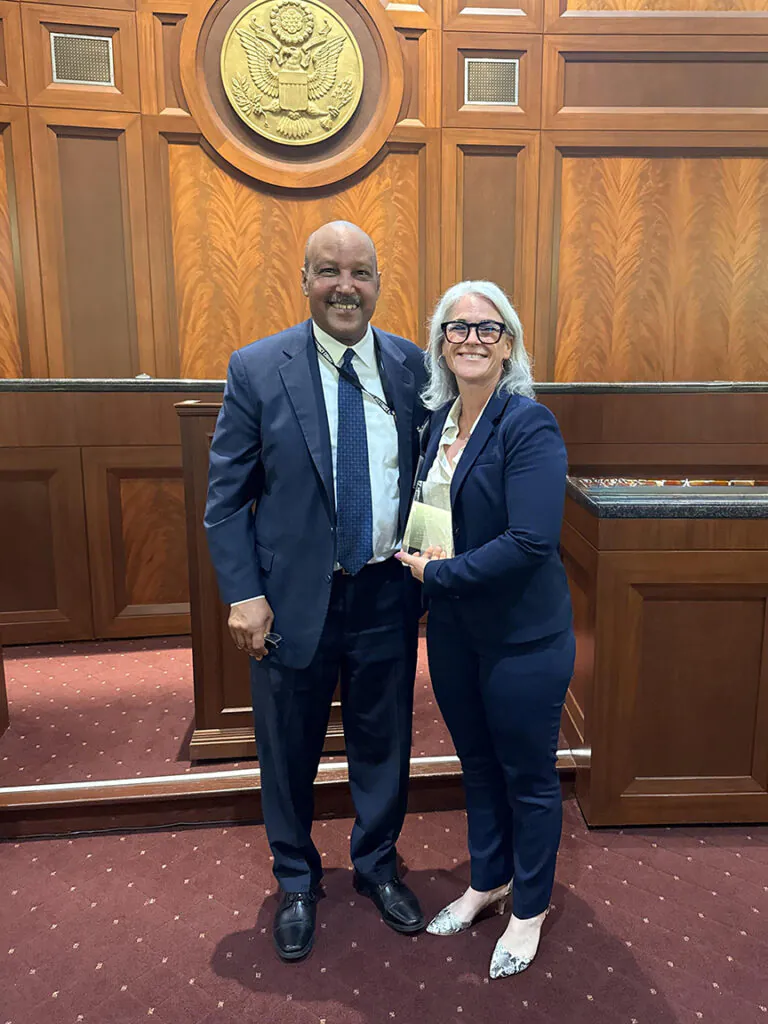
Joseph Greenwald & Laake is pleased to announce that Kaitlin Leary has been elevated to Senior Counsel.

Kaitlin is an experienced civil litigator who practices in state and federal courts at both the trial and appellate levels. Her work spans labor and employment law, financial services litigation, consumer protection, and criminal defense, with a focus on representing individuals harmed by corporate or governmental misconduct.

Kaitlin received her J.D., magna cum laude, from the University of Maryland and a dual B.S./B.A., with a University Honors Certificate, from the University of Maryland, College Park.

Timothy Maloney was quoted in an article published by The Baltimore Sun on February 5, 2026, following a Baltimore County Circuit Court decision that overturned the termination of his client, a former assistant manager at Gunpowder Falls State Park.

In a written decision issued January 30, 2026, Circuit Court Judge Thomas R. Tompsett Jr. ruled that the Maryland Department of Natural Resources failed to follow required procedures when it terminated the employee in 2022. The court concluded that the agency did not comply with its own rules and regulations and that the termination could not stand.

Tim, who represented the employee throughout the proceedings, emphasized the importance of due process for public workers. “As the court correctly found, Mr. Hughes was denied the basic procedural safeguards that most state employees are entitled to.”

The court agreed with arguments advanced by Tim that the agency failed to meet with his client before termination, did not adequately investigate the allegations, and did not provide proper notice or explanation of the evidence against him.

Read The Baltimore Sun article “Judge voids firing of Gunpowder Falls assistant manager.” (PDF)

Michal Shinnar will serve as a co‑panelist at an upcoming program hosted by the American University Labor & Employment Law Society titled “Know Your Rights – and How Trump is Changing Them: A Conversation with Disabled and Disability Law Practitioners.” The event will take place on February 9, 2026, at 12:00 p.m. Panelists will discuss current legal protections, recent policy developments, and the practical impact these changes may have on individuals with disabilities.

Gia Grimm will speak at the American University Law Review 2026 Annual Spring Symposium, which will be held on February 6 at the Washington College of Law. The Symposium brings together legal scholars and practitioners to examine current and emerging issues in labor and employment law.

Gia will co-present on the Employee Privacy Rights Panel, where she will discuss the evolving legal landscape governing employee monitoring and workplace privacy. Her remarks will address the current limits on employer tracking practices, including keystroke logging, internet usage monitoring, and screen surveillance, as well as practical steps employees can take to assert their rights, such as seeking transparency around monitoring policies.

Additional sessions at the Symposium will cover a range of timely labor and employment topics, including Title VII and recent Supreme Court decisions, whistleblower protections, and the classification of student athletes as employees.

Family law partners David Bulitt and Christopher Castellano take a wide-angle look at what divorce in Maryland really involves—from the emotional rollercoaster to the real-world financial impact. They talk openly about why divorce is often compared to a death in the family, how clients sometimes (without realizing it) drive up their own legal costs, and practical ways to stay informed without over-analyzing every single email or court filing.

David and Chris also discuss Maryland’s newer, streamlined grounds for divorce—mutual consent, six-month separation, and irreconcilable differences—and show how classic “fault” issues such as adultery, abuse, and financial misconduct are still relevant in custody, alimony, and property decisions even though they’re no longer formal grounds for divorce.

The discussion is a clear, plain-language overview designed to help you understand the road ahead before diving into the litigation side of divorce in Maryland Divorce Basics: From Filing to Final Judgment (Part 2).

Recent national events have again thrust law enforcement’s use of force into the spotlight. In Minneapolis, the fatal shootings of Renee Good and Alex Pretti by federal immigration agents have sparked protests and renewed questions about when officers are legally allowed to use force and what recourse exists when that force crosses the line.

While every situation is different, police use of force in the United States is governed by well-established legal rules rooted in the Constitution.

The Basic Legal Rule: Reasonableness

The Fourth Amendment protects people from “unreasonable” searches and seizures. The U.S. Supreme Court interpreted this protection to mean that police may only use force that is objectively reasonable under the circumstances. In simple terms, the law asks: Would a reasonable officer in the same situation believe that force was necessary at that moment? Officers may only use force when it is needed to gain control of a situation or to protect the safety of officers or others, and only when less forceful options are not reasonably available.

When reviewing a use-of-force incident, courts look at several common factors, including:

  • The severity of the suspected crime
  • Whether the person posed an immediate threat to the officers or the public
  • Whether the suspect was resisting arrest or attempting to flee

Courts look at all the information available to the officer in that moment, and even when force is necessary, it must remain proportional to the situation.

Deadly force—force that is likely to cause death or serious bodily injury—is subject to the strictest legal limits. Police may only use deadly force when they reasonably believe an individual poses an imminent threat of death or serious physical harm to the officer or to another person. Deadly force cannot be used solely to prevent someone from fleeing, and it generally cannot be used against someone who poses a danger only to themselves or to property.

Modern policing standards emphasize de-escalation tactics and techniques, meaning officers should attempt to calm situations and gain voluntary compliance when it is safe and reasonable to do so before resorting to force.

Officers also have a duty to intervene if they witness another officer using excessive force or otherwise engaging in conduct that violates the Constitution, the law, or departmental policy. Failing to step in can itself create legal liability.

What Counts as Excessive Force?

Excessive force occurs when police use more force than is reasonably necessary for the situation. This may include:

  • Using force that greatly exceeds what the circumstances require
  • Continuing to use force after a person has been restrained or subdued
  • Failing to attempt less forceful alternatives when time and conditions permit
  • Using prohibited or dangerous techniques
  • Using force as punishment rather than for control or protection

Civil Remedies: What Legal Options Exist?

Excessive force can sometimes lead to criminal charges against an officer. But even if no criminal charges are filed, a person may still have the right to pursue a civil lawsuit for unlawful or excessive force.

Individuals may bring civil rights lawsuits against state or local officers and, in some cases, the government agencies that employ them. These lawsuits can seek compensation for medical bills, lost income, pain and suffering, and emotional distress. In cases involving particularly egregious conduct, additional damages may be available, and courts may order changes to police policies or training.

Victims may also have claims under state law, such as assault, battery, or wrongful death. These claims vary by state and may be subject to special rules or limits on damages.

When federal officers are involved, different legal pathways apply, including claims against individual officers for constitutional violations and claims against the federal government for wrongful acts committed in the scope of employment.

In many civil rights cases, law enforcement officers raise the defense of qualified immunity, which can shield them from personal liability unless the law clearly established that their conduct was unlawful at the time. The doctrine is intended to allow officers to perform their duties without constant fear of litigation, but it does not protect officers who are plainly incompetent or who knowingly violate the law. Even so, qualified immunity has been widely criticized as it often limits civil claims even when serious injuries occur and remains a significant hurdle in excessive-force litigation. Some states, including Maryland, have enacted laws that restrict certain immunity protections and provide additional avenues for accountability under state law.

Key Takeaway

The rules on police use of force apply to all officers—local, state and federal, including ICE. While agencies may have different policies or training, every officer is bound by the same constitutional limits. Understanding these limits helps the public recognize when force may have crossed the line. Even when the Constitution sets the baseline, civil lawsuits often provide real accountability, transparency and sometimes systemic change.

No one wants to work in a toxic environment, but many people are working under such conditions. If you find yourself working in a toxic environment, then you may wonder if there is legal recourse. The answer is, well, it depends.

If the toxicity amounts to harassment that is based on protected characteristics, such as your race, national origin, age, sex, religion, and/or disability status, then this harassment may create what is known as a “hostile work environment.” Fortunately, there is legal recourse for a hostile work environment.

Typically, to determine if a Maryland employee is subjected to a hostile work environment according to federal law, federal courts in Maryland will look to whether: (1) the employee experienced unwelcome harassment; (2) the harassment was based on the employee’s protected characteristic(s); (3) the harassment was sufficiently pervasive or severe to change the conditions of employment and create an abusive atmosphere; and (4) there is some reason to impose liability on the employer.

Common examples of harassment that may create a hostile work environment include, but are not limited to, physical assaults and/or threats, objectionable jokes, derogatory statements, and insults that are based on the protected characteristics listed above.

If you are a private-sector employee, to address a hostile work environment—prior to filing a complaint in court—you have a limited time in which you must file a charge of discrimination directly with the Equal Employment Opportunity Commission (“EEOC”).

Specifically, if you work in Maryland, you have 300 days since the last incident of workplace harassment in which you can file a charge of discrimination with the EEOC.

The EEOC is a federal agency that investigates potential cases of employment discrimination, harassment based on protected characteristics—such as those listed above—and retaliation.

For additional information regarding the EEOC, read our posts, “Labor & Employment Issue? Start with the EEOC!” and “What is the EEOC, and Do I Need Labor & Employment Representation?”

In an article published by Law360 on January 22, 2026, Veronica Nannis examined major False Claims Act (FCA) trends, verdicts, settlements and initiatives from 2025 – a year that also marked the start of a new presidential administration.

She notes that FCA enforcement remained strong in traditional areas such as healthcare fraud, while newer and more controversial initiatives – particularly those targeting alleged illegal diversity, equity, and inclusion practices and gender-affirming care – also emerged. Overall, she writes, the trend toward litigating FCA cases continues to gain momentum and shows little sign of slowing, with both defendants and relators increasingly willing to take risks.

Veronica also discusses notable jury verdicts and appeals, observing that settlements were far more common. Many of the largest settlements centered on healthcare, including a nationwide takedown in June involving 324 defendants charged with more than $14.6 billion in alleged fraud. Other significant settlements involved tariffs and cybersecurity, with the latter producing several cases likely to pave the way for future enforcement actions.

A key takeaway, Veronica concludes, is that the FCA is alive and well, and while traditional fraud areas continue to be a priority, new initiatives – particularly those tied to civil rights and healthcare ideology — will likely face significant legal challenges.

Read the full article “Key False Claims Act Trends From The Last Year.” (PDF)

Darin Rumer recently achieved a successful appellate result for a mother in a child custody modification case.

The parents, who were not married, shared joint legal custody of their child under a January 2024 court order. That order awarded the mother primary physical custody, with the father exercising parenting time every other weekend. In April 2025, the father filed an emergency motion seeking temporary custody.

Following an emergency hearing, the trial court granted the father’s motion in part and entered an Emergency Custody Order temporarily modifying the existing custody arrangement. Darin filed an appeal on the mother’s behalf to the Appellate Court of Maryland.

On appeal, the appeals court held that the trial court erred by issuing an Emergency Custody Order without first determining whether a material change in circumstances had occurred and whether the requested modification was in the child’s best interests. As a result, the Appellate Court vacated the emergency order and remanded the case for further proceedings consistent with its opinion. 

One of the most common sources of confusion for people facing marital conflict in Maryland is the legal terminology. Terms like separation, divorce, litigation, mediation, and settlement are used interchangeably, yet each has a distinct legal meaning and very different consequences. Understanding these differences is essential before making decisions that affect your finances, your children, and your legal rights.

This article explains how these and other terms work in Maryland family law and how they often intersect in your case.

1. What “Separation” Means in Maryland

Unlike some states, Maryland does not have a formal legal status called “legal separation.” In Maryland, separation simply means that spouses are living “separate and apart”, with the intent that the marital relationship has ended. Separation can occur:

  • In different residences, or,
  • In the same home, if the spouses live independently (often referred to as “separation under the same roof”).

Separation is legally significant because it may:

  • Serve as a prerequisite for certain divorce grounds,
  • Impact custody and child support arrangements,
  • Suggest a date for the division of property in the context of a settlement.

However, separation alone does not end the marriage, divide property, or create enforceable financial obligations unless a court order or agreement exists.

2. Divorce: Absolute vs. Limited Divorce

Maryland only recognizes one type of divorce, an Absolute Divorce. An absolute divorce permanently dissolves the marriage. Once granted, spouses are legally single and free to remarry.

An absolute divorce judgment may address:

Most people seeking a divorce ultimately pursue an absolute divorce, even if they begin with separation or negotiations.

Prior to the State of Maryland’s legislative change to the grounds for divorce, a limited divorce existed as a “legal separation” whereby temporary orders could be entered to deal with custody, financial support, or use and possession of the family home. Now, limited divorce is no longer a feature of Maryland law.

3. Agreements: Separation Agreements and Settlement Agreements

Many Maryland divorce cases are resolved through written agreements, rather than a contested trial. A separation or marital settlement agreement is a contract between spouses that may address:

  • Property division,
  • Support obligations,
  • Custody and parenting schedules,
  • Responsibility for expenses,
  • Future dispute resolution.

These agreements can be:

  • Executed before a divorce is filed,
  • Incorporated into a divorce judgment,
  • Enforced as contracts or court orders.

Agreements offer several advantages:

  • Greater control over outcomes,
  • Reduced cost and emotional strain,
  • Privacy (as opposed to public court proceedings).

However, poorly drafted agreements can create long-term problems. Once incorporated into a judgment, modifying them can be difficult.

4. Litigation: When the Court Decides

Litigation occurs when spouses cannot reach an agreement and ask the court to decide contested issues. Litigated cases will often include all issues arising out of the marriage. Litigation occurs when one of the spouses files a Complaint for Absolute Divorce with the Court in the county in which you reside. The Complaint may ask the Court for any number of points of relief, including:

  • Custody and parenting time,
  • Child support or alimony,
  • Valuation and division of assets,
  • A monetary award,
  • Attorneys’ fees.

Because litigation is the formal process of contesting your divorce in the Court, the process includes the common aspects of the court process, such as:

  • Pleadings and motions,
  • Discovery (financial disclosures, subpoenas, depositions),
  • Hearings and trial,
  • Judicial rulings based on evidence and testimony.

While litigation is sometimes necessary, particularly in high-conflict or high-asset cases, it is often more expensive, time-consuming, and unpredictable than negotiated resolutions.

Notably, when a case enters the phase of litigation, this does not prevent people from deciding to settle their case and avoid the continuation of litigation. In fact, a settlement of a case remains possible until the proverbial gavel is dropped by the presiding Judge during a final trial in a case.

5. How These Concepts Work Together in Real Cases

In practice, most Maryland family law cases involve acombination of these elements:

  • A couple separates,
  • Negotiates some issues by agreement,
  • Litigates the left over/most contentious issues,
  • Ultimately obtains an absolute divorce.

There is no single “right” path. The appropriate approach depends on:

  • The level of conflict,
  • Financial complexity,
  • Safety concerns,
  • Whether children are involved,
  • Each party’s willingness to negotiate in good faith.

It is critically important not compare your case to a family or friend’s prior case. While divorce cases can often follow a similar path, each family’s unique set of facts and emotions makes each and every case distinct.

6. Why Legal Guidance Matters Early

Misunderstanding these family law terms can lead to costly mistakes, such as assuming separation alone provides legal protection or signing an agreement without understanding its long-term implications. Speaking with a Maryland family law attorney early can help you:

  • Understand your options,
  • Choose the right process for your situation,
  • Avoid unnecessary litigation,
  • Protect your financial and parental rights.

Final Thoughts

Separation, divorce, agreements, and litigation are tools, not outcomes. Knowing how they differ and how they interact allows you to make informed and strategic decisions during what will inevitably prove to be one of the most difficult periods of time in your life. If you are considering separation or divorce, a consultation can help clarify next steps and put you on a path that aligns with your goals.

Super Lawyers has named 13 attorneys from JGL’s Maryland offices to its 2026 Maryland Super Lawyers and Rising Stars lists. In addition, Lindsay Parvis was named to the Top 100 Super Lawyers list in Maryland and the Top 50 Women Super Lawyers list in Maryland.

Super Lawyers, part of Thomson Reuters, is a rating service of outstanding lawyers in over 70 practice areas, who have achieved a high degree of professional achievement and peer recognition. The annual selection process combines independent research, peer nominations and evaluations, with no more than five percent of each state’s attorneys named to the Super Lawyers list and no more than 2.5 percent named to the Rising Stars list.

The following attorneys were named to the 2026 Super Lawyers list:

Greenbelt, MD

  • Andy Greenwald – Medical Malpractice
  • Jay P. Holland – Employment & Labor
  • Timothy F. Maloney – General Litigation
  • Steven M. Pavsner – Personal Injury – Medical Malpractice: Plaintiff

Rockville, MD

  • David M. Bulitt – Family Law
  • Jeffrey N. Greenblatt – Family Law
  • Lindsay Parvis – Family Law

The following attorneys were named to the 2026 Super Lawyers Rising Stars list:

Rising Stars

  • Bridget Cardinale – Civil Litigation: Plaintiff
  • Christopher R. Castellano – Family Law
  • Virginia B. Grimm – Civil Litigation: Plaintiff
  • Kaitlin Leary – Employment & Labor
  • Alyse Prawde – Civil Litigation: Plaintiff

David Bulitt has been named “Best Family Attorney” by Potomac Lifestyle. Chosen by the publication’s readers, The Best Businesses in Potomac 2026 list celebrates the area’s businesses, people and places.

A family lawyer since 1986, David brings deep experience to clients navigating complex and emotionally challenging matters. He is consistently listed among Maryland’s top family law attorneys, has co-authored two award-winning relationship books, is a frequent media contributor and a podcast host.